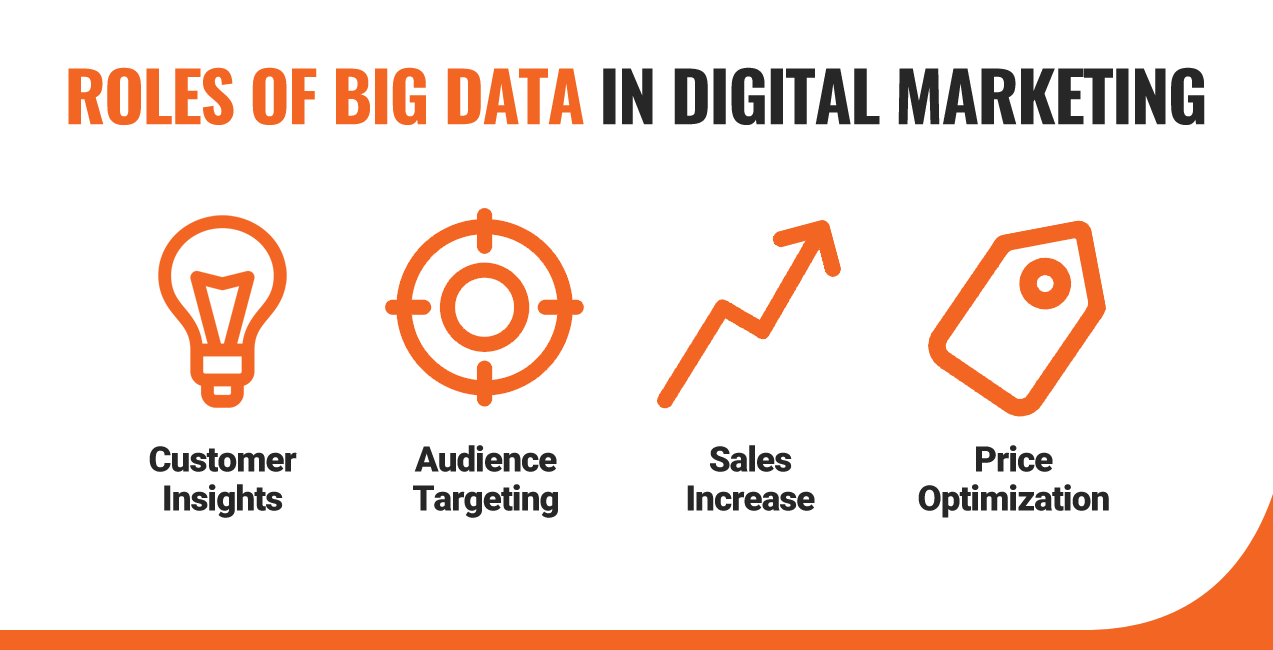
In today’s hyper-connected world, data has become the backbone of digital transformation. Businesses are no longer relying solely on intuition or traditional marketing techniques; instead, they are leveraging vast amounts of data to make informed decisions. This is where Big Data plays a pivotal role. Big Data refers to the enormous volume of structured and unstructured data generated every second from various sources such as social media, websites, mobile apps, and customer interactions.
In digital marketing, Big Data has revolutionized how companies understand their audiences, personalize experiences, and optimize campaigns. It enables marketers to uncover hidden patterns, predict consumer behavior, and deliver highly targeted content. This article explores the role of Big Data in digital marketing and how it enhances customer insights, driving business growth and competitive advantage.
Understanding Big Data in Digital Marketing
Big Data is often characterized by the three Vs: Volume, Velocity, and Variety. These elements define the scale and complexity of the data that businesses handle today.
- Volume refers to the massive amount of data generated daily.
- Velocity indicates the speed at which data is created and processed.
- Variety highlights the different types of data, including text, images, videos, and more.
In digital marketing, this data comes from multiple channels such as search engines, social media platforms, email campaigns, and website analytics. By analyzing this data, marketers can gain valuable insights into customer preferences, behaviors, and trends.
The Importance of Big Data in Digital Marketing
1. Enhanced Customer Understanding
One of the most significant advantages of Big Data is its ability to provide a deeper understanding of customers. By analyzing data from multiple touchpoints, businesses can create detailed customer profiles.
These profiles include demographic information, purchasing behavior, browsing habits, and engagement patterns. This level of insight allows marketers to understand what customers want, when they want it, and how they prefer to interact with brands.
2. Personalization at Scale
Personalization has become a key factor in successful digital marketing strategies. Big Data enables businesses to deliver personalized experiences to millions of users simultaneously.
For example:
- Customized email campaigns based on user behavior
- Product recommendations tailored to individual preferences
- Personalized website content
This level of personalization not only improves customer satisfaction but also increases conversion rates and customer loyalty.
3. Improved Decision-Making
Data-driven decision-making is at the core of modern marketing. Big Data provides real-time insights that help marketers make informed decisions quickly.
Instead of relying on guesswork, businesses can use data analytics to:
- Identify successful marketing strategies
- Optimize advertising budgets
- Predict campaign outcomes
This reduces risks and enhances overall marketing efficiency.
Big Data and Customer Insights
1. Behavioral Analysis
Big Data allows marketers to analyze customer behavior in great detail. By tracking user interactions across different platforms, businesses can understand how customers engage with their brand.
Key behavioral insights include:
- Pages visited on a website
- Time spent on each page
- Click-through rates
- Purchase history
These insights help marketers identify patterns and trends, enabling them to create more effective marketing strategies.
2. Predictive Analytics
Predictive analytics uses historical data to forecast future behavior. This is one of the most powerful applications of Big Data in digital marketing.
With predictive analytics, businesses can:
- Anticipate customer needs
- Identify potential leads
- Reduce customer churn
- Optimize marketing campaigns
For example, an e-commerce company can predict which products a customer is likely to purchase based on their browsing history.
3. Sentiment Analysis
Sentiment analysis involves analyzing customer opinions and emotions expressed in online content such as reviews, comments, and social media posts.
Big Data tools can process large volumes of text data to determine whether customer sentiment is positive, negative, or neutral. This helps businesses understand how customers perceive their brand and identify areas for improvement.
Applications of Big Data in Digital Marketing
1. Targeted Advertising
Big Data enables highly targeted advertising by segmenting audiences based on specific criteria such as age, location, interests, and behavior.
This ensures that marketing messages reach the right audience at the right time, increasing the effectiveness of advertising campaigns and reducing wasted ad spend.
2. Content Marketing Optimization
Content is a crucial component of digital marketing, and Big Data helps optimize content strategies.
By analyzing user engagement data, marketers can determine:
- Which types of content perform best
- What topics resonate with audiences
- The best times to publish content
This allows businesses to create content that drives traffic, engagement, and conversions.
3. Customer Journey Mapping
Big Data provides a comprehensive view of the customer journey, from initial awareness to final purchase.
By mapping the customer journey, businesses can identify key touchpoints and optimize each stage to improve the overall customer experience.
4. Real-Time Marketing
Real-time marketing involves delivering relevant messages to customers at the right moment. Big Data enables real-time analysis of customer behavior, allowing marketers to respond instantly.
For example:
- Sending personalized offers when a user abandons a shopping cart
- Displaying targeted ads based on current browsing activity
Benefits of Big Data in Digital Marketing
1. Increased ROI
By leveraging data-driven strategies, businesses can maximize their return on investment. Big Data helps optimize marketing campaigns, ensuring that resources are used efficiently.
2. Better Customer Engagement
Personalized and relevant content leads to higher levels of customer engagement. Big Data enables businesses to connect with customers on a deeper level.
3. Competitive Advantage
Companies that effectively use Big Data gain a significant competitive advantage. They can quickly adapt to market changes, understand customer needs, and outperform competitors.
4. Improved Customer Retention
By analyzing customer behavior and preferences, businesses can implement strategies to retain customers and build long-term relationships.
Challenges of Using Big Data in Digital Marketing
1. Data Privacy Concerns
With the increasing use of data, privacy has become a major concern. Businesses must ensure that they comply with data protection regulations and maintain customer trust.
2. Data Management Complexity
Managing large volumes of data can be challenging. Businesses need advanced tools and technologies to store, process, and analyze data effectively.
3. Integration Issues
Integrating data from multiple sources can be complex. Ensuring data consistency and accuracy is essential for reliable insights.
4. Skill Gaps
There is a growing demand for skilled professionals who can analyze and interpret Big Data. Businesses may face challenges in finding the right talent.
Future Trends of Big Data in Digital Marketing
1. Artificial Intelligence and Machine Learning
AI and machine learning are transforming how Big Data is used in digital marketing. These technologies enable advanced analytics, automation, and predictive capabilities.
2. Hyper-Personalization
The future of digital marketing lies in hyper-personalization. Big Data will allow businesses to deliver even more tailored experiences based on individual preferences.
3. Voice and Visual Search
As voice assistants and visual search technologies become more popular, Big Data will play a crucial role in understanding and optimizing these interactions.
4. Data-Driven Customer Experience
Customer experience will continue to be a top priority. Big Data will enable businesses to create seamless and personalized experiences across all touchpoints.
Best Practices for Leveraging Big Data
To maximize the benefits of Big Data, businesses should follow these best practices:
- Define Clear Objectives
Identify what you want to achieve with Big Data and align it with your business goals. - Invest in the Right Tools
Use advanced analytics tools and platforms to manage and analyze data effectively. - Ensure Data Quality
Accurate and reliable data is essential for meaningful insights. - Focus on Customer Privacy
Implement strong data protection measures and comply with regulations. - Build a Skilled Team
Hire or train professionals with expertise in data analytics.
Conclusion
Big Data has fundamentally transformed digital marketing and customer insights. It empowers businesses to understand their customers better, deliver personalized experiences, and make data-driven decisions. From targeted advertising to predictive analytics, the applications of Big Data are vast and continually evolving.
However, to fully harness its potential, businesses must address challenges such as data privacy, management complexity, and skill gaps. By adopting the right strategies and technologies, companies can leverage Big Data to gain a competitive edge and drive long-term success.
As digital landscapes continue to evolve, the role of Big Data will only become more significant. Businesses that embrace data-driven marketing will be better positioned to meet customer expectations and thrive in an increasingly competitive market.