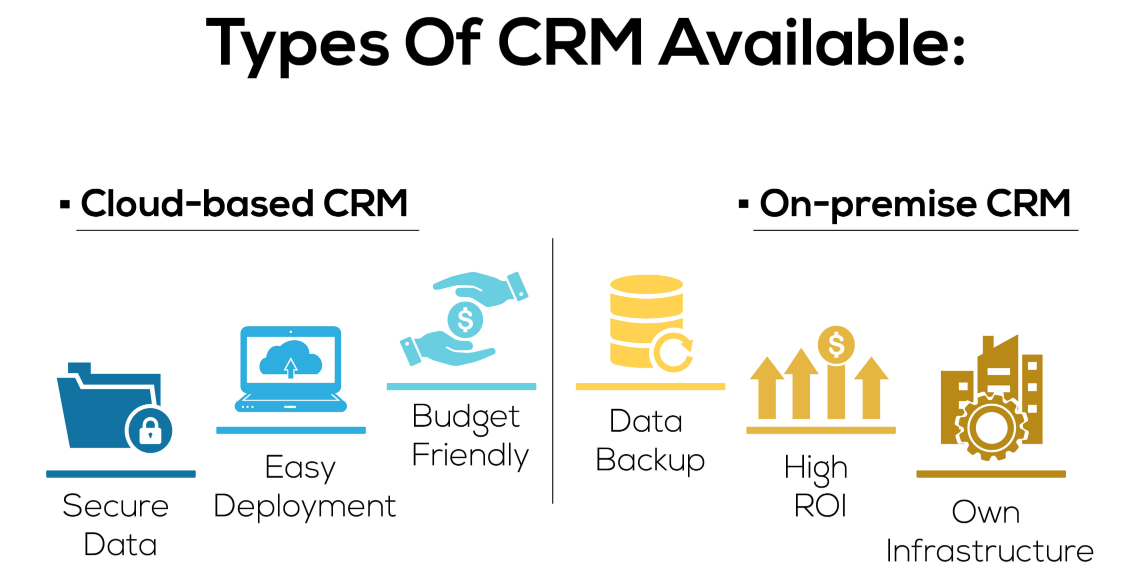
In today’s highly competitive digital landscape, businesses must build strong, lasting relationships with their customers. One of the most powerful tools to achieve this is a Customer Relationship Management (CRM) system. However, when it comes to choosing the right CRM solution, companies often face a critical decision: Cloud-Based CRM vs On-Premise CRM.
Both deployment models offer unique advantages and challenges, and selecting the right one can significantly impact your business operations, scalability, security, and overall efficiency. In this comprehensive guide, we’ll explore the differences, benefits, drawbacks, and use cases of each system to help you determine which CRM solution is best for your organization.
What is a CRM System?
Before diving into comparisons, it’s essential to understand what a CRM system is. A Customer Relationship Management (CRM) system is software designed to help businesses manage interactions with current and potential customers. It centralizes customer data, streamlines processes, improves communication, and enhances customer satisfaction.
CRM systems typically include features such as:
- Contact management
- Sales tracking
- Marketing automation
- Customer support tools
- Analytics and reporting
Now, let’s break down the two main types of CRM deployment.
What is Cloud-Based CRM?
A Cloud-Based CRM, also known as Software-as-a-Service (SaaS) CRM, is hosted on the vendor’s servers and accessed via the internet. Users can log in through a web browser without needing to install software on their local machines.
Key Characteristics of Cloud-Based CRM
- Hosted remotely by a third-party provider
- Accessible from anywhere with an internet connection
- Subscription-based pricing model
- Automatic updates and maintenance
- Scalable and flexible
What is On-Premise CRM?
An On-Premise CRM is installed locally on a company’s own servers and infrastructure. The organization is responsible for managing, maintaining, and securing the system.
Key Characteristics of On-Premise CRM
- Hosted internally on company servers
- Requires in-house IT management
- One-time licensing cost (plus maintenance)
- Full control over data and customization
- Limited remote accessibility (unless configured)
Cloud-Based CRM vs On-Premise CRM: Key Differences
Understanding the fundamental differences between these two deployment models is crucial for making an informed decision.
1. Deployment and Accessibility
Cloud-Based CRM systems are accessible anytime, anywhere, as long as there is an internet connection. This makes them ideal for remote teams, global organizations, and businesses with mobile sales forces.
On-Premise CRM systems, on the other hand, are typically limited to internal networks unless remote access is specifically configured. This can restrict flexibility but may enhance control.
Winner: Cloud-Based CRM
2. Cost Structure
Cloud-Based CRM solutions operate on a subscription model, usually monthly or annually. This reduces upfront costs but may result in higher long-term expenses.
On-Premise CRM requires a significant initial investment in hardware, software licenses, and IT resources. However, ongoing costs may be lower over time.
Winner: Depends on budget strategy
- Short-term: Cloud-Based CRM
- Long-term: On-Premise CRM
3. Maintenance and Updates
With Cloud-Based CRM, the vendor handles all updates, patches, and maintenance automatically. This ensures users always have access to the latest features.
On-Premise CRM requires internal IT teams to manage updates, troubleshoot issues, and maintain the system, which can be time-consuming and costly.
Winner: Cloud-Based CRM
4. Scalability
Cloud-Based CRM systems are highly scalable. Businesses can easily add or remove users, storage, and features as needed.
On-Premise CRM scalability is limited by hardware capacity. Expanding the system often requires purchasing additional infrastructure.
Winner: Cloud-Based CRM
5. Data Security and Control
On-Premise CRM offers greater control over data since everything is stored internally. This is particularly important for industries with strict regulatory requirements.
Cloud-Based CRM providers invest heavily in security, including encryption, backups, and compliance certifications. However, some businesses may be concerned about storing sensitive data offsite.
Winner: Depends on security preference
- Full control: On-Premise CRM
- Advanced vendor security: Cloud-Based CRM
6. Customization
On-Premise CRM systems often allow deeper customization because businesses have full access to the software environment.
Cloud-Based CRM platforms offer customization as well, but within the limitations set by the provider.
Winner: On-Premise CRM
7. Implementation Time
Cloud-Based CRM can be deployed quickly—often within days or weeks—since there’s no need for hardware setup.
On-Premise CRM implementation can take months due to installation, configuration, and infrastructure setup.
Winner: Cloud-Based CRM
Advantages of Cloud-Based CRM
Choosing a Cloud-Based CRM offers several compelling benefits:
1. Accessibility and Mobility
Employees can access data from anywhere, making it ideal for remote work environments and field sales teams.
2. Lower Upfront Costs
No need for expensive hardware or IT infrastructure.
3. Automatic Updates
Users always have the latest features without manual intervention.
4. Scalability
Easily grow your system as your business expands.
5. Disaster Recovery
Most providers offer automatic backups and recovery solutions.
Disadvantages of Cloud-Based CRM
Despite its advantages, Cloud-Based CRM also has some drawbacks:
- Dependence on internet connectivity
- Ongoing subscription costs
- Limited control over data
- Potential vendor lock-in
Advantages of On-Premise CRM
On-Premise CRM is still a strong choice for many organizations:
1. Full Data Control
All data is stored internally, providing maximum control and privacy.
2. Customization Flexibility
Highly customizable to meet specific business needs.
3. No Recurring Subscription Fees
After the initial investment, costs may be lower in the long run.
4. Compliance
Easier to meet strict regulatory requirements in certain industries.
Disadvantages of On-Premise CRM
However, On-Premise CRM also comes with challenges:
- High upfront costs
- Requires dedicated IT staff
- Slower implementation
- Limited scalability
- Manual updates and maintenance
Use Cases: Which CRM is Right for You?
Choose Cloud-Based CRM if:
- You have a remote or distributed workforce
- You want quick implementation
- You prefer lower upfront costs
- You need scalability and flexibility
- You lack a large IT team
Choose On-Premise CRM if:
- You require strict data control and security
- You operate in a highly regulated industry
- You have strong in-house IT capabilities
- You need extensive customization
- You prefer long-term cost savings
Industry Trends: The Shift Toward Cloud
In recent years, there has been a significant shift toward Cloud-Based CRM solutions. Businesses are increasingly adopting cloud technology due to its flexibility, scalability, and ease of use.
Small and medium-sized enterprises (SMEs) especially benefit from cloud solutions, as they can access enterprise-level tools without heavy investment. Even large corporations are transitioning to hybrid or fully cloud-based systems.
Hybrid CRM: The Best of Both Worlds?
Some organizations opt for a hybrid CRM model, combining elements of both cloud and on-premise systems. This approach allows businesses to store sensitive data locally while leveraging the scalability and accessibility of the cloud.
Hybrid solutions can be complex but offer a balanced approach for companies with unique needs.
Factors to Consider Before Choosing
When deciding between Cloud-Based CRM and On-Premise CRM, consider the following factors:
1. Budget
Evaluate both initial and long-term costs.
2. Business Size
Smaller businesses often benefit more from cloud solutions.
3. IT Resources
Do you have the expertise to manage an on-premise system?
4. Security Requirements
How sensitive is your customer data?
5. Growth Plans
Will your CRM need to scale quickly?
6. Integration Needs
Ensure compatibility with existing tools and software.
Final Verdict: Which One Is Better?
There is no one-size-fits-all answer to the question: Cloud-Based CRM vs On-Premise CRM: Which One Is Better?
The best choice depends on your business goals, resources, and priorities.
- Cloud-Based CRM is ideal for flexibility, scalability, and ease of use.
- On-Premise CRM is better for control, customization, and data security.
For most modern businesses, especially startups and growing companies, Cloud-Based CRM is often the preferred option. However, organizations with strict compliance requirements or unique operational needs may find On-Premise CRM more suitable.
Conclusion
Choosing between Cloud-Based CRM and On-Premise CRM is a critical decision that can shape your company’s future. Both options offer valuable features, but their suitability depends on your specific needs.
If you prioritize convenience, scalability, and lower upfront costs, Cloud-Based CRM is likely the better choice. If your focus is on control, customization, and data security, On-Premise CRM may be the way to go.
Ultimately, the right CRM solution is the one that aligns with your business strategy and empowers your team to build stronger customer relationships.
FAQs
1. Is Cloud-Based CRM secure?
Yes, most providers implement advanced security measures such as encryption, firewalls, and regular audits.
2. Can small businesses use On-Premise CRM?
Yes, but it may not be cost-effective compared to cloud solutions.
3. Which CRM is easier to implement?
Cloud-Based CRM is generally faster and easier to deploy.
4. Can I switch from On-Premise to Cloud later?
Yes, many businesses migrate to the cloud as they grow.