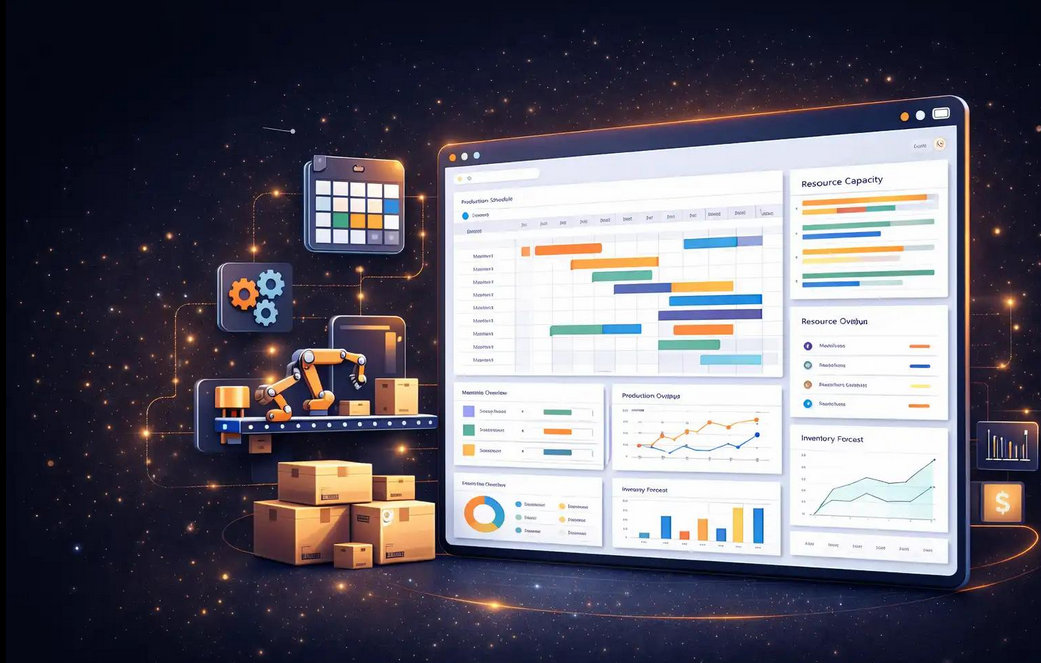
Manufacturing businesses across the United States face increasing pressure to improve productivity, reduce operational costs, optimize inventory, and meet customer expectations. As competition grows and supply chains become more complex, manufacturers require advanced tools to streamline operations and gain real-time visibility into every aspect of their business.
This is where Enterprise Resource Planning (ERP) software becomes essential.
The best ERP software for manufacturing companies in USA can integrate production planning, inventory management, procurement, accounting, sales, customer relationship management, quality control, and supply chain operations into one centralized platform.
Whether you’re a small manufacturing company, a mid-sized industrial business, or a large enterprise operating multiple facilities, choosing the right ERP solution can significantly impact profitability and operational efficiency.
In this comprehensive guide, we’ll explore the top ERP systems for manufacturing companies, compare features, discuss pricing considerations, and help you determine the best ERP solution for your business.
Why Manufacturing Companies Need ERP Software
Manufacturers manage numerous moving parts every day:
- Raw materials
- Production schedules
- Workforce management
- Inventory tracking
- Quality assurance
- Supplier relationships
- Shipping logistics
- Financial reporting
Without a centralized system, these processes often operate in silos, leading to:
- Inventory shortages
- Production delays
- Data inaccuracies
- Increased labor costs
- Customer dissatisfaction
An ERP platform solves these challenges by creating a unified operational environment.
Key Benefits
1. Real-Time Visibility
ERP systems provide instant access to:
- Inventory levels
- Production status
- Sales performance
- Supply chain metrics
- Financial reports
Managers can make informed decisions based on accurate, real-time information.
2. Improved Production Planning
Manufacturing ERP software helps:
- Forecast demand
- Schedule production
- Allocate resources efficiently
- Reduce downtime
This improves throughput while lowering operational costs.
3. Inventory Optimization
Manufacturers can:
- Reduce excess stock
- Avoid stockouts
- Improve warehouse efficiency
- Automate inventory replenishment
4. Better Financial Management
Integrated accounting modules allow companies to:
- Monitor cash flow
- Generate financial reports
- Manage budgets
- Improve compliance
5. Enhanced Customer Satisfaction
ERP systems improve order accuracy, delivery performance, and communication throughout the customer journey.
Features to Look for in Manufacturing ERP Software
Before selecting an ERP platform, evaluate whether it includes these critical capabilities.
Production Management
Essential features include:
- Production scheduling
- Work order management
- Capacity planning
- Shop floor control
Inventory Management
Look for:
- Barcode scanning
- Warehouse tracking
- Inventory forecasting
- Automated stock alerts
Supply Chain Management
A robust ERP should offer:
- Vendor management
- Procurement automation
- Demand planning
- Logistics coordination
Quality Control
Manufacturers benefit from:
- Quality inspections
- Compliance tracking
- Defect management
- Corrective actions
Financial Management
Important accounting functions include:
- General ledger
- Accounts payable
- Accounts receivable
- Budgeting
- Cost accounting
Reporting and Analytics
Advanced dashboards help businesses:
- Analyze KPIs
- Monitor performance
- Forecast trends
- Improve strategic planning
Best ERP Software for Manufacturing Companies in USA
1. SAP S/4HANA
SAP is one of the most recognized ERP providers worldwide.
Advantages
- Enterprise-grade capabilities
- Advanced analytics
- AI-powered automation
- Global scalability
Best For
Large manufacturing enterprises.
Pros
- Powerful reporting
- Strong compliance tools
- Industry-specific modules
Cons
- High implementation cost
- Longer deployment timelines
2. Oracle NetSuite
NetSuite is a cloud-based ERP platform widely used by manufacturers.
Advantages
- Fully cloud-based
- Easy scalability
- Real-time dashboards
Best For
Growing mid-sized manufacturers.
Pros
- Lower IT overhead
- Strong financial tools
- Excellent reporting
Cons
- Subscription costs can increase as users grow
3. Microsoft Dynamics 365
Microsoft Dynamics 365 combines ERP and CRM functionality.
Advantages
- Seamless Microsoft integration
- Advanced business intelligence
- Flexible deployment options
Best For
Manufacturers already using Microsoft products.
Pros
- Familiar interface
- Strong automation
- Excellent analytics
Cons
- Customization may require consultants
4. Epicor Kinetic
Epicor is specifically designed for manufacturing operations.
Advantages
- Manufacturing-focused features
- Production management excellence
- Industry specialization
Best For
Discrete manufacturers.
Pros
- Strong MES integration
- Detailed shop floor control
- Excellent scheduling tools
Cons
- Learning curve for new users
5. Infor CloudSuite Industrial
Infor offers industry-specific ERP solutions.
Advantages
- Manufacturing expertise
- Cloud deployment
- Supply chain optimization
Best For
Mid-sized to large manufacturers.
Pros
- Industry-focused workflows
- Strong planning capabilities
- Modern user interface
Cons
- Advanced customization may increase costs
6. Acumatica Manufacturing Edition
Acumatica has gained popularity among growing manufacturers.
Advantages
- Modern cloud architecture
- Flexible licensing
- User-friendly interface
Best For
Small and medium-sized businesses.
Pros
- Cost-effective
- Strong mobile access
- Scalable platform
Cons
- Fewer third-party integrations than larger competitors
ERP Comparison Table
| ERP Solution | Best For | Deployment | Scalability | Manufacturing Features |
|---|---|---|---|---|
| SAP S/4HANA | Enterprises | Cloud/On-Premise | Excellent | Excellent |
| Oracle NetSuite | Mid-Market | Cloud | Excellent | Very Good |
| Dynamics 365 | Mid-Large | Cloud/Hybrid | Excellent | Very Good |
| Epicor Kinetic | Manufacturers | Cloud/On-Premise | Very Good | Excellent |
| Infor CloudSuite | Industrial Firms | Cloud | Excellent | Excellent |
| Acumatica | SMBs | Cloud | Very Good | Very Good |
How Much Does Manufacturing ERP Software Cost?
Pricing depends on:
- Number of users
- Deployment model
- Customization requirements
- Industry modules
Typical Cost Ranges
Small Manufacturers
- $10,000–$50,000 implementation
- Monthly subscriptions starting around $500+
Mid-Sized Manufacturers
- $50,000–$250,000 implementation
Enterprise Manufacturers
- $250,000–$1,000,000+ implementation
While ERP software requires significant investment, many manufacturers achieve ROI within 12–36 months.

Cloud ERP vs On-Premise ERP
Cloud ERP
Advantages
- Lower upfront costs
- Automatic updates
- Remote accessibility
- Faster deployment
Disadvantages
- Ongoing subscription fees
On-Premise ERP
Advantages
- Greater control
- Custom infrastructure
Disadvantages
- Higher upfront costs
- IT maintenance requirements
Most modern manufacturers are moving toward cloud ERP solutions due to flexibility and scalability.
Common ERP Implementation Challenges
Employee Resistance
Solution:
- Provide comprehensive training
- Involve users early
Data Migration
Solution:
- Clean data before migration
- Test thoroughly
Budget Overruns
Solution:
- Define scope clearly
- Choose experienced implementation partners
Process Changes
Solution:
- Standardize workflows
- Document procedures
How to Choose the Right ERP Software
Consider the following factors:
Business Size
Different ERP systems serve different company sizes.
Industry Requirements
Look for manufacturing-specific functionality.
Budget
Evaluate:
- Licensing costs
- Implementation fees
- Training expenses
- Support costs
Scalability
Choose software that grows with your company.
Vendor Reputation
Research:
- Customer reviews
- Support quality
- Industry expertise
Future Trends in Manufacturing ERP
Modern ERP platforms increasingly include:
Artificial Intelligence
AI helps automate:
- Forecasting
- Scheduling
- Inventory planning
Internet of Things (IoT)
Connected machines provide real-time production data.
Predictive Analytics
ERP systems identify risks before problems occur.
Automation
Routine tasks become automated, reducing labor costs.
Advanced Cybersecurity
Manufacturers increasingly require stronger data protection.
Frequently Asked Questions
What is the best ERP software for manufacturing companies in USA?
The answer depends on company size and requirements. SAP, Oracle NetSuite, Microsoft Dynamics 365, Epicor, Infor, and Acumatica are among the leading options.
Which ERP is best for small manufacturers?
Acumatica and NetSuite are popular choices due to scalability and affordability.
How long does ERP implementation take?
Implementation can range from three months to over a year depending on complexity.
Is cloud ERP better than on-premise ERP?
For most modern manufacturers, cloud ERP offers greater flexibility, lower infrastructure costs, and easier maintenance.
Can ERP improve manufacturing profitability?
Yes. ERP software helps reduce waste, optimize inventory, improve productivity, and enhance decision-making.
Conclusion
Selecting the best ERP software for manufacturing companies in USA is a strategic investment that can transform operations, improve efficiency, and drive long-term growth.
Manufacturers seeking enterprise-level capabilities often choose SAP S/4HANA or Oracle NetSuite. Companies invested in Microsoft technologies benefit from Dynamics 365. Industry-focused organizations frequently prefer Epicor or Infor, while growing small and mid-sized manufacturers often find Acumatica to be a cost-effective solution.
The right ERP system provides visibility, automation, scalability, and operational excellence—critical factors for remaining competitive in today’s manufacturing landscape.
Before making a final decision, conduct a detailed needs assessment, request demonstrations, compare total costs, and evaluate implementation support to ensure your ERP investment delivers maximum return.