
In today’s digital economy, every small business needs a reliable online presence. Whether you operate an eCommerce store, a local service company, a consulting agency, or a startup, your website plays a critical role in attracting customers and generating revenue. However, many business owners struggle to find hosting solutions that balance performance, security, scalability, and affordability.
This is where affordable cloud hosting services for small business become an ideal solution. Unlike traditional shared hosting, cloud hosting utilizes multiple interconnected servers to provide better uptime, faster website performance, improved security, and flexible scalability.
In this comprehensive guide, we will explore everything small business owners need to know about cloud hosting, including benefits, features, pricing considerations, and how to choose the right provider.
What Is Cloud Hosting?
Cloud hosting is a web hosting technology that uses a network of virtual servers instead of relying on a single physical server.
When your website experiences increased traffic, cloud resources can automatically scale to accommodate demand. This ensures consistent performance and minimizes downtime.
Key characteristics include:
- High availability
- Resource scalability
- Improved performance
- Enhanced security
- Pay-as-you-grow pricing
For small businesses, these advantages can significantly improve website reliability while keeping costs under control.
Why Small Businesses Need Cloud Hosting
Many entrepreneurs begin with inexpensive shared hosting. While this may work initially, growth often creates challenges such as:
- Slow website speed
- Limited storage
- Traffic restrictions
- Security vulnerabilities
- Frequent downtime
Cloud hosting addresses these problems by distributing workloads across multiple servers.
Benefits Include:
1. Better Website Speed
Website speed directly affects user experience and search engine rankings.
Cloud hosting environments typically utilize:
- SSD or NVMe storage
- Content Delivery Networks (CDNs)
- Optimized server configurations
- Global data centers
Faster websites often result in:
- Higher conversions
- Lower bounce rates
- Better SEO rankings
2. Enhanced Reliability
Traditional hosting can fail if a single server experiences issues.
Cloud hosting distributes resources across multiple servers, reducing the risk of downtime.
This makes cloud hosting ideal for:
- Online stores
- Appointment booking websites
- Membership platforms
- Lead generation websites
3. Scalability
One of the greatest advantages of cloud hosting is scalability.
As your business grows, you can:
- Increase RAM
- Expand storage
- Add processing power
- Handle traffic spikes
Without migrating to a new server.
4. Improved Security
Cybersecurity threats continue to increase each year.
Cloud hosting providers typically offer:
- Firewall protection
- Malware scanning
- DDoS mitigation
- SSL certificates
- Automatic backups
These features help protect business websites from costly attacks.
5. Cost Efficiency
Affordable cloud hosting services allow businesses to pay only for resources they need.
This eliminates unnecessary expenses while providing enterprise-level performance.
Essential Features to Look For
Not all cloud hosting providers are equal.
When evaluating options, focus on these essential features.
Uptime Guarantee
Look for providers offering:
- 99.9% uptime or higher
- Redundant infrastructure
- Automatic failover systems
Fast Storage
Choose hosting plans that include:
- SSD storage
- NVMe drives
- High-performance databases
Daily Backups
Automatic backups protect against:
- Human error
- Malware attacks
- System failures
Security Features
Important protections include:
- Free SSL certificates
- Web application firewall
- Malware scanning
- DDoS protection
Customer Support
Reliable support is crucial.
Look for:
- 24/7 live chat
- Email support
- Knowledge base
- Technical experts
Easy Control Panel
Business owners should be able to manage hosting without advanced technical knowledge.
Popular control panels include:
- cPanel
- Plesk
- Custom dashboards
How Cloud Hosting Improves SEO
Search engines prioritize user experience.
Cloud hosting contributes to SEO performance through:
Faster Page Load Times
Google considers page speed a ranking factor.
Faster websites typically receive:
- Higher rankings
- Better engagement
- Increased conversions
Better Uptime
Downtime can negatively affect search visibility.
Cloud hosting reduces website interruptions and maintains accessibility.
Enhanced Security
Secure websites are favored by search engines.
SSL certificates and malware protection improve trustworthiness.
Mobile Performance
Cloud infrastructure helps optimize performance across mobile devices.
Since mobile-first indexing is standard, this provides additional SEO benefits.
Affordable Cloud Hosting Use Cases
eCommerce Stores
Online retailers need:
- Fast checkout pages
- Secure transactions
- Traffic scalability
Cloud hosting delivers all three.
Professional Services
Law firms, consultants, accountants, and agencies benefit from:
- Fast-loading websites
- Lead generation forms
- Appointment booking systems
Local Businesses
Restaurants, clinics, contractors, and real estate agents require:
- Reliable online presence
- High uptime
- Good local SEO performance
SaaS Startups
Cloud hosting supports rapid growth without major infrastructure investments.
Cloud Hosting vs Shared Hosting
| Feature | Shared Hosting | Cloud Hosting |
|---|---|---|
| Performance | Moderate | High |
| Scalability | Limited | Excellent |
| Reliability | Moderate | High |
| Security | Basic | Advanced |
| Downtime Risk | Higher | Lower |
| Growth Potential | Limited | Excellent |
Cloud hosting consistently outperforms traditional shared hosting for growing businesses.
How to Choose the Right Provider
Assess Your Business Needs
Consider:
- Monthly traffic
- Website complexity
- Storage requirements
- Budget
Compare Pricing
Evaluate:
- Monthly fees
- Renewal costs
- Scalability expenses
- Included features
Read Reviews
Customer feedback can reveal:
- Support quality
- Reliability
- Hidden costs
- Performance consistency
Test Customer Support
Contact support before purchasing.
Response speed often reflects future service quality.
Cost Expectations
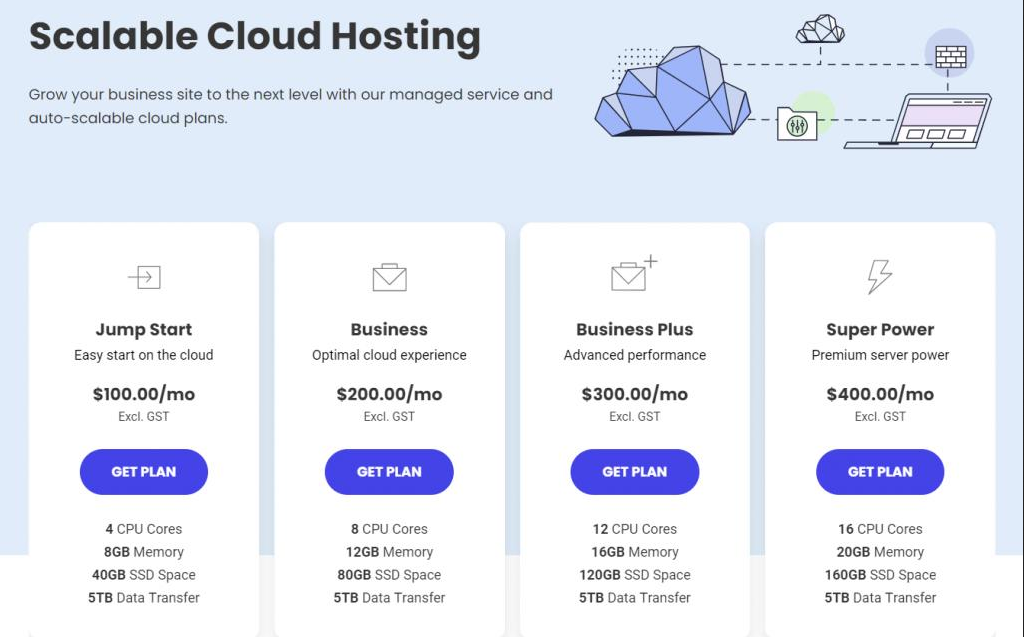
Affordable cloud hosting services for small business generally fall into these ranges:
Entry-Level Plans
- $5–$15/month
Suitable for:
- Personal websites
- Small blogs
- Startup projects
Business Plans
- $15–$50/month
Ideal for:
- Small businesses
- Lead generation websites
- Growing eCommerce stores
Advanced Plans
- $50–$200/month
Best for:
- High-traffic websites
- SaaS applications
- Enterprise projects
Common Mistakes to Avoid
Choosing Based Only on Price
The cheapest provider may lack performance and support.
Ignoring Scalability
Growth can become expensive if your hosting cannot scale efficiently.
Overlooking Security
A security breach can cost significantly more than premium hosting.
Forgetting Backup Solutions
Always ensure automatic backups are included.
Future Trends in Cloud Hosting
The cloud hosting industry continues to evolve rapidly.
Emerging trends include:
AI-Powered Optimization
Artificial intelligence improves:
- Resource allocation
- Security monitoring
- Performance tuning
Green Hosting
Many providers are investing in:
- Renewable energy
- Carbon-neutral infrastructure
- Sustainable data centers
Edge Computing
Edge technology reduces latency and improves user experiences worldwide.
Enhanced Cybersecurity
Advanced threat detection systems continue to improve protection for businesses.
Conclusion
Choosing the right hosting environment is one of the most important decisions for any growing company. Affordable cloud hosting services for small business provide an excellent balance of performance, reliability, security, and scalability.
By selecting a provider that offers strong uptime guarantees, fast storage, robust security features, and responsive support, businesses can build a reliable online presence without overspending.
As digital competition increases, cloud hosting is becoming the preferred solution for companies that want faster websites, better customer experiences, and long-term growth. Investing in cloud hosting today can help position your business for success in the years ahead.